Types of Ski Slopes and Difficulty Levels: A Comprehensive Guide for Skiers

Ski slopes are typically classified into four main categories based on their difficulty levels: green (beginner), blue (intermediate), black (advanced), and double black diamond (expert). Green slopes are gentle with a milder gradient, suitable for beginners. Blue slopes offer moderate challenges for USA skiers with some experience. Black slopes provide advanced terrain with steeper gradients and more challenging features. Double black diamond slopes are extremely difficult, often featuring very steep pitches and various obstacles, intended for expert skiers only. It’s essential for skiers to familiarize themselves with these classifications to ensure they select the appropriate trails for their skill level.
Ski Slope Difficulty Classification
When you’re out on a ski mountain, you’ll notice that ski trails are color-coded – some are green, others blue, and then there are those marked with a black diamond. These aren’t just random colors thrown around; they actually indicate how difficult the trail is going to be. It’s like having your own secret code to communicate with the mountain!
Green Trails: These are designed for beginners. Here, the hills are gentle and won’t get too steep, making them ideal for people who are still learning to balance on their skis or snowboard. You’ll typically find smooth, wide paths with plenty of space to practice your moves without worrying about obstacles in your way.
Blue Trails: Once you’ve graduated from green, it’s time to step up to blue trails. They’re meant for skiers who are confident enough to handle slightly steeper terrain and are comfortable making controlled turns down the slopes. This is where you can start picking up speed and feeling the adrenaline rush as you make your way downhill.
Black Diamond Trails: These trails are for advanced skiers who have mastered their technique and are ready for a real challenge. The slopes here aren’t just steep; they may also have unexpected twists and turns that demand quick reflexes and top-notch control. This kind of terrain requires precision and confidence, so it’s not for everyone.
As a beginner, it might seem tempting to jump onto advanced trails after a day or two of practice, but it’s really important to follow these classifications until you’re fully confident in managing the challenges each type of trail presents.
Remember that these classifications aren’t just about age or how cool you think you might look cruising down a hard trail—it’s about protecting yourself and enjoying skiing safely. It’s best to challenge yourself step by step rather than all at once.
Understanding this difficulty classification system not only helps skiers know what they’re getting into, but it also ensures that they choose trails that align with their skill level and experience to enjoy a safe and fun skiing experience.
With a newfound understanding of ski slope classifications, let’s now guide our gaze toward an inviting journey—embodying the essence of grace and skillfulness amidst the ambient winter landscape.
Beginner Skier: Green Trails
Green trails are akin to the nursery rhymes of skiing. Just as children need to grasp the basics before delving into more complex stories, beginner skiers require easy and comfortable trails to get their footing in this exhilarating sport. So, what makes green trails special?
What to Expect on Green Trails
When you’re just starting out, it’s crucial to feel safe and in control. Green trails accomplish just that—they’re designed to provide a sense of security. You’ll encounter gentle slopes that aren’t too steep, wide trails that aren’t too narrow, and very few obstacles to worry about. This means you can practice those basic techniques without much pressure or intimidation.
The best part? These trails are often conveniently located close to the base area, making them super accessible if you need a breather or a quick break. Even when you’re feeling unsure, you won’t have to fret about going too fast or doing something you’re not ready for.
Finding Comfort on Green Trails
These trails aren’t only meant for beginners. Even as you progress in your skiing journey, returning to these easy runs can be deeply fulfilling. Think of it as a warm-up for your skiing day—doing some easy laps before tackling the more challenging terrain feels good and keeps your basic skills sharp.
Additionally, if you’re with others who are just finding their ski legs, riding these trails with them can be a joyful experience—you get to see them learn and grow right before your eyes. In essence, green trails offer not just an introduction to skiing but also a place of comfort and calm among the snowy peaks and exhilarating slopes. Whether you’re taking those first wobbly steps or brushing up on basics, these trails offer support and space for growth—the cornerstones of any successful skiing adventure.
Green trails lay the groundwork for every skier’s transformation from novice to expert—an essential beginning that sets the stage for even grander adventures ahead.
Intermediate Skier: Blue Trails
So, you’re past the beginner stage and ready for a bit more adventure, but not quite prepared for the daring black diamond slopes. Blue trails are perfect for skiers looking to take their skills up a notch. They provide a comfortable transition from the easy beginner terrain to the more challenging expert runs.
The Characteristics of Blue Trails
Blue trails often feature a mix of gentle and moderately steep slopes, ideal for intermediate skiers who want to develop their skills without being overwhelmed by steep inclines. These trails are wide and spacious, allowing more room for practicing turns and control. You may also find some occasional obstacles like small moguls or minor natural features as an introduction to more challenging terrains.
Remember, don’t compare blue trails at one resort to those at another—different ski areas classify difficulty levels differently. Always pay attention to trail signs and ask locals or staff for advice before heading out.
If you’ve been skiing on green slopes and feel comfortable maintaining control throughout the descent, blue trails are the logical next step to hone your turning techniques. The variety of terrain you’ll find on blue trails is designed to help you become a more well-rounded skier.
Building Confidence and Skills
While navigating blue trails, it’s important to focus on honing your turning, speed control, and weight-shifting techniques. Intermediate skiers use these trails to work on refining and solidifying the fundamental ski movements they learned on easier slopes.
As you venture onto blue trails, focus on mastering parallel skiing. This technique involves keeping your skis parallel as you turn down the slope. Adopting this technique early will greatly benefit you in future skiing endeavors. Remember, developing good habits now will make transitioning into tougher terrain much easier later on.
Exploring New Terrain
Additionally, blue trails offer intermediate skiers great opportunities to familiarize themselves with longer runs and diverse snow conditions such as slightly steeper sections or icy patches that may challenge your adeptness on skis.
It’s essential to embrace these new experiences as they contribute significantly to expanding your skillset, allowing you to meet varied challenges with confidence in any setting.
If you’re transitioning from green to blue runs, start by spending a little time observing others skiing down the blue trail you plan to try. Take note of their turns, posture, and general technique as this will serve as visual guidance when it’s time for you to head down that slope.
With a growing proficiency on blue trails comes an urge to test limits further—a yearning for steeper slopes and thrilling descents awaits. Now let’s explore what it takes to conquer the daunting black diamond trails.
Advanced Skier: Black Diamond Trails
Black diamond trails are renowned for being the most thrilling and difficult slopes at a ski resort. They are specifically tailored for skiers with advanced skills who fearlessly take on steep terrain, moguls, and other obstacles that may lie in their path. When you’re on a black diamond trail, you’ll experience some of the most intense and exhilarating runs on the mountain.
To conquer a black diamond trail, possessing a strong command of turning technique, speed control, and overall balance is crucial. With these skills honed, you can confidently navigate through the varied and demanding terrain the trail presents.
While black diamond trails are consistently classified as such in North America, it’s important to note that these designations based on difficulty can vary by region or country. Furthermore, within the category of black diamond trails, there are often varying degrees of difficulty ranging from “single” black diamonds to “double” or even “triple” black diamonds, signifying progressively more challenging terrain.
Experienced skiers should ideally have requisite extensive practice navigating intermediate and advanced runs before tackling these challenging black diamond trails.
Advanced skiers should be adept at traversing incredibly steep pitches along with noticeable obstacles such as large moguls that necessitate effective jump turns and quick maneuvering. Similar to mastering any complex skill set, proficiency comes only through continuous dedication and practice.
Some globally well-known black diamond ski runs include:
- The Corbet’s Couloir trail at Jackson Hole Mountain Resort in Wyoming; famous for its intimidating entrance requiring a significant leap into the chute.
- The Delirium Dive at Banff’s Sunshine Village in Alberta; this challenging terrain is justly known for its precipitous chutes and jagged landscape.
- Kachina Peak at Taos Ski Valley in New Mexico; celebrated for offering some of the most dramatic skiing experiences in the state.
- The Great Scott trail at Snowbird Ski & Summer Resort in Utah; a notably aggressive expert run renowned for its sheer vertical drop and steepness.
Clearly defining an informed understanding among skiers about the factors influencing the difficulty of black diamond slopes plays a significant role in ensuring safety while partaking in these thrilling downhill pursuits.
Understanding the complexity and allure of these challenging terrains is essential for any dedicated skier venturing into mixed trail terrain. Now, we delve into the intricate dynamics that come into play when navigating such diverse landscapes.
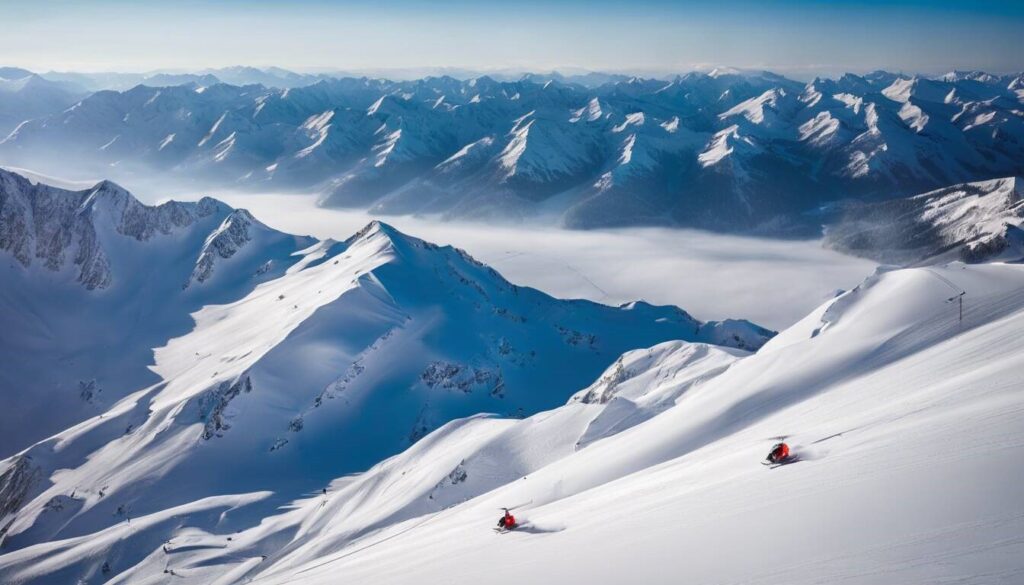
Skiing on mixed terrain can be both exhilarating and challenging. Imagine this: You’re on a trail. It starts off easy, but by the time you get halfway down, it becomes quite a bit more difficult. That’s mixed terrain for you. It’s not just about cruising down neat turns on even ground; you also have to quickly adjust to steeper pitches and tighter curves.
For skiers who enjoy variety in their skiing experience, mixed trail terrain offers an excellent challenge. Mastering smooth transitions between different levels of difficulty while navigating these dynamic routes is crucial. One moment you’re cruising with ease, and the next, you’re faced with a sharp descent or a tricky curve.
Knowing when to slow down, adjust your technique, and anticipate changes is essential for navigating these unpredictable runs. Watch out for trail signs, which provide important information about upcoming sections so you can adjust your speed and strategy accordingly.
Finding a balance between control and speed is key when maneuvering through mixed terrain. Visual cues such as snow conditions, elevation changes, and signage play vital roles in guiding your choices while skiing. Keeping your eyes open for trail markers will help ensure you stay on paths that match your skills. Whether it’s transitioning from green to blue or blue to black diamond slopes, understanding these signage points gives you the confidence to tackle both smooth and challenging sections with precision.
Imagine coming off an easy slope and seeing a sign indicating a steep descent ahead – being prepared for that switch can make all the difference in ensuring a successful run.
These transition zones are where skiers of all experience levels meet. Skiers new to blue trails might find themselves on routes that suddenly become more challenging as they intersect with tougher alternatives. The ability to promptly adjust your technique and speed is indispensable here.
By staying aware of signage and following trail markings closely, you’ll master the art of navigating mixed trail terrain successfully—enabling seamless transitions between varied levels of difficulty while enjoying the diverse landscapes on offer in mountainous regions.
Mastering the complexities of slopes brings us closer to creating our very own perfect ski terrains where adventure reigns supreme.
Extrapolating From Basics: Creating the Perfect Slope
Creating a slope where skiers can experience joy and excitement isn’t simple; it’s a mix of science and art! The ski resort has to carefully consider the slope gradient, snow conditions, and obstacles to make sure everyone feels good while skiing there. This means balancing beginner, intermediate, and advanced slopes so that each one is just difficult enough to be interesting but not so hard that it scares people.
Many ski resorts have an army of experts who work tirelessly, sometimes through the night, to keep slopes perfect for all skiers. Some resorts have special machines capable of smoothing out bumpy trails using their weight and sharp edges.
Factors to Consider in Slope Creation
When a new slope is being designed, there are some main things they have to think about:
- Slope Gradient: How steep or gentle the slope should be.
- Snow Conditions: How much snow there is and what kind—it’s different skiing on fluffy snow compared to icy snow!
- Obstacles: Things like trees and rocks that a skier has to look out for.
- Balancing Skill Levels: Ensuring there’s a nice balance so everyone can find a slope just right for them.
- Slope Maintenance: Regular grooming and upkeep are critical for maintaining optimal skiing surfaces.
These factors come together to give skiers a fantastic experience on the slopes.
The goal is not just to create trails, but to craft a tapestry designed to engage and inspire every individual gliding down the mountain. It’s an art form in itself, with each turn making for a unique canvas of enjoyment and challenge.
By meticulously grooming and maintaining the terrain, resorts aim to curate the ideal ski slopes for visitors to explore and enjoy.
Remember that it’s not only about the skill level; everyone has different tastes too. Some people love wide open slopes where they can go really fast, others love sharp turns and surprises. Ski resorts cater to these preferences while maintaining safety for all skiers.
All in all, creating the perfect slope involves considering numerous elements in harmony, from design principles grounded in practicality to fostering an atmosphere ripe with excitement and satisfaction for all types of skiers.
With meticulous planning and dedication to fine-tuning every aspect of slope design, ski resorts strive to offer a delightful blend of thrill and tranquility for skiing enthusiasts everywhere.