Personalization in Education: Tailoring Learning Experiences with ERP Software
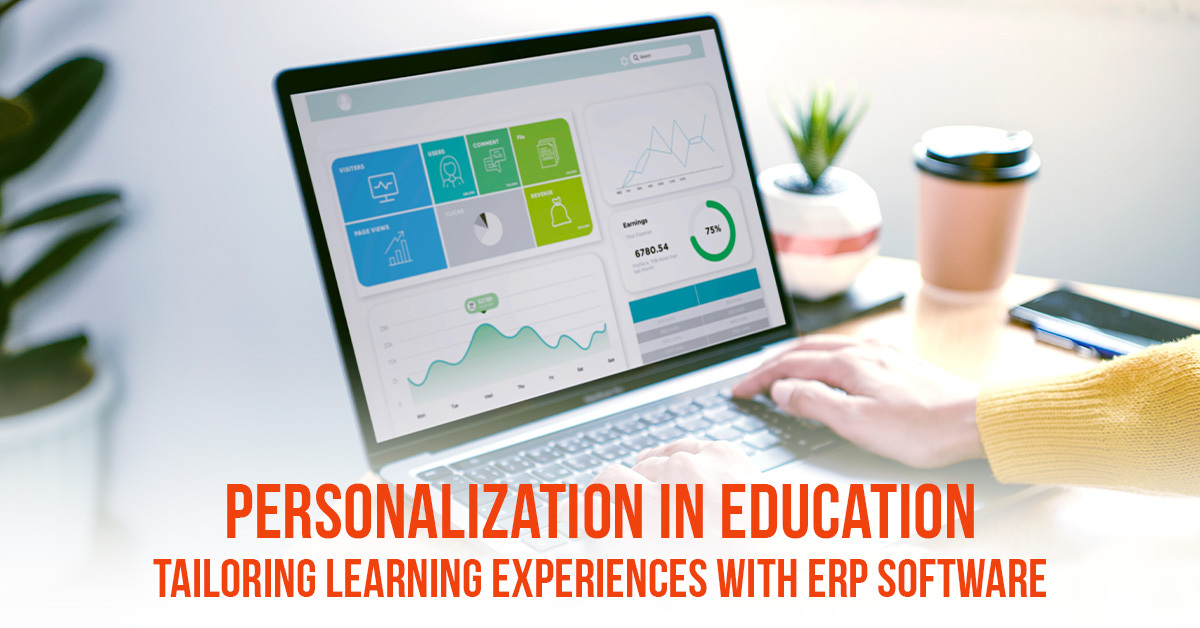
Personalization in education refers to the practice of tailoring learning experiences to meet the individual needs, interests, and learning styles of students. This approach recognizes that every learner is unique and requires personalised attention to maximise their educational outcomes. With the advancement of technology, educational institutions are increasingly adopting Enterprise Resource Planning (ERP) software to facilitate and enhance personalization in education. Here are some key points highlighting the significance of personalization in education and the role of ERP system in achieving this goal:
- Meeting Individual Needs:
- Personalization in education acknowledges that students have different learning needs and preferences.
- ERP software enables educators to collect and analyse data on students’ strengths, weaknesses, and learning styles.
- This data allows teachers to create personalised learning plans that address individual needs and help students progress at their own pace.
- Enhancing Engagement:
- Personalised learning experiences foster student engagement by making education relevant and meaningful.
- ERP software provides tools for educators to develop interactive and multimedia-rich content that caters to diverse student interests.
- By incorporating personalised elements, such as real-world examples and interactive simulations, School ERP software enhances student engagement and motivation.
- Differentiated Instruction:
- Personalization in education promotes differentiated instruction, which involves tailoring teaching methods and content to accommodate different learning styles and abilities.
- ERP software facilitates the creation of diverse instructional materials, allowing teachers to present information in multiple formats (text, audio, video, etc.).
- By offering differentiated instruction through ERP software, educators can cater to individual learning preferences and ensure that all students have equal opportunities to succeed.
- Adaptive Learning:
- ERP software can support adaptive learning, an approach that adjusts the learning experience based on students’ performance and progress.
- Through continuous assessment and data analysis, school ERP software identifies areas of strength and weakness for each student.
- Based on this information, the software adapts the content and difficulty level of assignments, quizzes, and activities to provide appropriate challenges and support.
- Personalized Feedback:
- Personalization in education goes beyond content delivery; it also involves providing individualised feedback.
- ERP system offers features for educators to provide timely and specific feedback to students.
- With ERP software, teachers can track students’ progress, identify areas for improvement, and offer personalised guidance to help students overcome challenges.
- Data-Driven Decision Making:
- ERP software collects and analyses vast amounts of data on student performance, engagement, and behaviour.
- This data enables educators to make informed decisions regarding personalised interventions and instructional strategies.
- By leveraging data-driven insights, teachers can identify patterns, trends, and individual needs, ultimately improving the effectiveness of their teaching practices.
- Collaboration and Communication:
- ERP software facilitates effective collaboration and communication among students, teachers, and parents.
- Through ERP platforms, students can collaborate on group projects, participate in online discussions, and receive feedback from peers and teachers.
- Teachers can communicate with students and parents through integrated messaging systems, sharing updates, reminders, and personalised feedback.
- Streamlining Administrative Tasks:
- ERP software not only supports personalised learning experiences but also streamlines administrative tasks for educational institutions.
- It automates routine administrative processes, such as attendance tracking, grade calculation, and scheduling, freeing up time for teachers to focus on personalised instruction.
- By reducing administrative burdens, ERP software allows educators to allocate more time and energy to personalised teaching and learning.
- Accessibility and Inclusion:
- Personalization in education promotes accessibility and inclusion by ensuring that learning materials are accessible to all students, regardless of their abilities or disabilities.
- ERP software offers features for creating accessible content, such as closed captions, alternative text descriptions, and adjustable font sizes.
- By embracing inclusive practices through ERP software, educational institutions can provide equitable learning experiences for all students.
- Continuous Improvement:
- Personalization in education is an ongoing process that requires continuous improvement and refinement.
- ERP software enables educators to gather feedback and insights from students, parents, and colleagues to make data-informed adjustments to personalised learning plans.
- By continuously evaluating and adapting personalised learning strategies, educational institutions can enhance student outcomes and instructional practices over time.
- Individualised Learning Paths:
- ERP allows educators to develop individualised learning paths for students based on their unique needs, interests, and goals.
- These personalised learning paths can include customised sequences of learning activities, resources, and assessments to support each student’s progress.
- Tailored Remediation and Enrichment:
- Personalization through school ERP enables targeted remediation for students who are struggling with specific concepts or skills.
- By identifying areas of weakness through data analysis, teachers can provide personalised interventions and resources to help students overcome challenges.
- Similarly, school ERP facilitates the provision of enriched learning opportunities for students who have mastered the material and need additional challenges.
- Self-Paced Learning:
- ERP system can support self-paced learning, allowing students to learn at their own speed and progress through the curriculum according to their individual capabilities.
- With ERP software, students can access learning materials, complete assignments, and track their own progress, promoting autonomy and self-directed learning.
- Personalised Assessments:
- ERP software enables the creation of personalised assessments that align with students’ individual learning objectives and preferences.
- Educators can design formative and summative assessments that assess students’ knowledge, skills, and competencies in a personalised manner, providing valuable insights for instructional planning.
- Parental Involvement:
- ERP software facilitates parental involvement in personalised education.
- Parents can access the ERP platform to monitor their child’s progress, review assignments, communicate with teachers, and actively participate in their child’s learning journey.
- This involvement fosters a collaborative relationship between parents and educators, ultimately supporting students’ personalised learning experiences.
- Integration of Learning Analytics:
- ERP software integrates learning analytics, allowing educators to analyse student data to gain insights into their learning patterns, preferences, and areas of improvement.
- By leveraging learning analytics, teachers can make data-driven decisions to personalise instruction, identify effective teaching strategies, and improve educational outcomes.
- Comic books
Conclusion
Personalization in education plays a crucial role in meeting the diverse needs of learners. ERP software serves as a powerful tool for educators, enabling them to create personalised learning experiences, adapt instruction, provide individualised feedback, and streamline administrative tasks. By harnessing the potential of ERP software, educational institutions can foster engagement, improve learning outcomes, and empower students to reach their full potential in an increasingly personalised and technology-driven educational landscape.