How to Use a Field Watch for Navigation
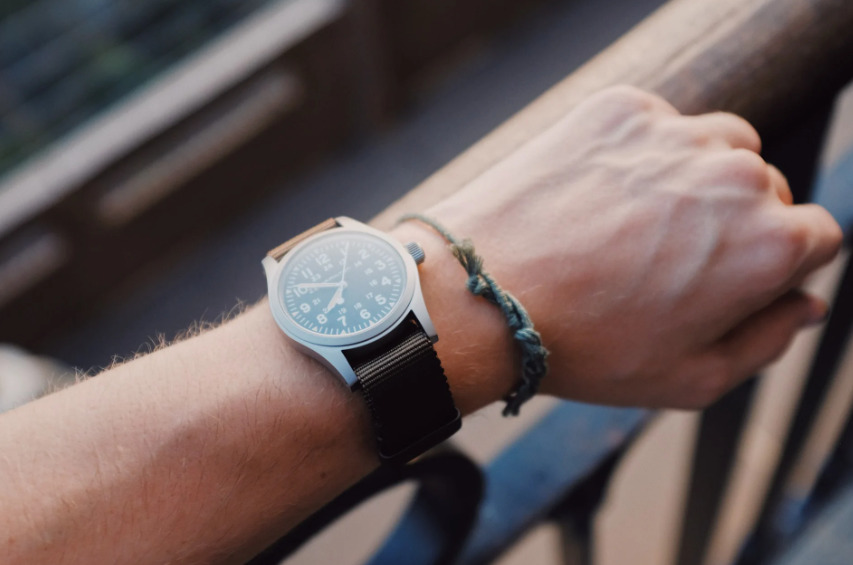
Field watches have been trusted navigation tools for adventurers and soldiers for decades thanks to their durable, precise, and practical designs. With the right field watch on your wrist, you can navigate through the wildest terrain. In this guide, we’ll explain the key ways a field watch can aid navigation and cover the ideal features to look for.
Contents
Rotating Compass Bezels
One of the most useful navigation features on a field watch is a rotating compass bezel. This ring around the watch face can rotate to align with the watch’s hour hand. You can then use it as a makeshift compass to determine your orientation and heading.
To use the compass bezel, first point the hour hand towards the sun to estimate north in the northern hemisphere or south in the southern hemisphere. Turn the rotating bezel so the mark lines up with the hour hand. The bezel will now indicate compass points. ‘N’ indicates north, with each tick mark representing 2 cardinal/inter-cardinal points.
Check or set your heading by turning your body so 0°/360° lines up with your intended direction. The bezel will stay aligned so you can track direction as you move and navigate precisely.
Mapping Distance with the Seconds Hand
You can also use a field watch’s second hand to estimate distances on a map based on your walking pace.
First, walk a measured mile and time how many minutes/seconds it takes. Next, use the seconds hand to time how long it takes to walk between landmarks or across a certain distance on your map.
Based on your known pace per second, you can calculate the distance covered. It’s a simple way to track the distance traveled and navigate by map without fancy digital devices.
GMT Complications for Accurate Timekeeping
Quality field watches may also offer GMT (second-time zone) complications to display a second time. This lets you keep track of both local time and UTC (coordinated universal) time simultaneously.
Knowing the accurate UTC time is crucial for using the sun’s position for orientation. Map coordinates and navigation data are also based on the 24-hour UTC time. GMT functions to ensure you know the exact universal time no matter where you are.
Rugged Construction to Withstand the Elements
To provide reliable navigation assistance, a field watch must be rugged enough to withstand outdoor conditions. Look for water resistance to 100m, anti-magnetic protection, shock resistance, and scratch-proof crystals like sapphire glass.
Premium materials like titanium cases will survive knocks and corrosion while keeping the weight comfortable on your wrist throughout day-long treks. The watch must be utterly dependable.
Visibility in All Conditions
Finally, a field watch should offer daylight visibility and lume for low light conditions. Bold indices, high-contrast dials, and anti-reflective coatings aid daytime readability. Luminous paint on hands/markers glows to reveal the time after dark.
These visibility aids ensure you can check the watch for navigation and timekeeping at any time of day or night.
With its specialized compass, timing, and timekeeping features, a purpose-built field watch is uniquely suited for outdoor navigation of all kinds. By mastering these navigation techniques, your reliable field watch will keep you on track.