How to Custom CNC Router Wood
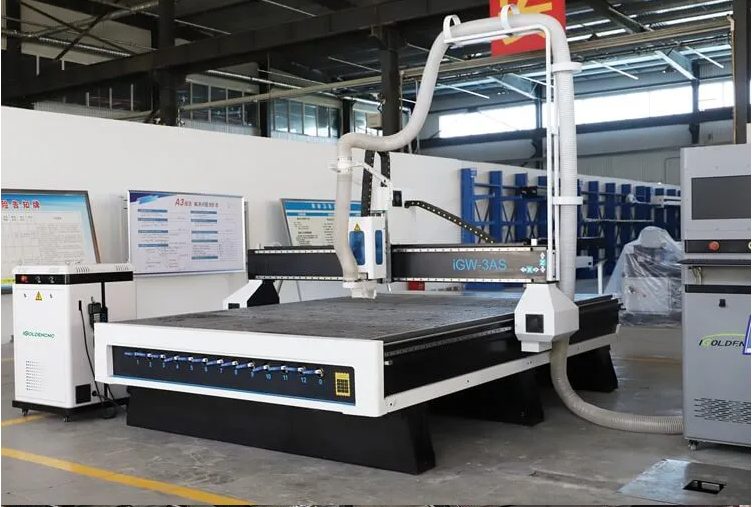
When it comes to woodworking, the first thing that comes to mind is custom CNC routing. CNC routers are becoming the mainstay machines for cutting many types of wood. They allow you to create intricate patterns tailored to meet individual preferences. Furthermore, custom CNC router wood increases creativity and customer satisfaction.
Before making a custom CNC router wood, you should understand the process to avoid expensive mistakes. This article will take you through what a CNC router wood is, how to custom CNC router wood, and dos and don’ts for a stress-free operation.
What is a Custom CNC Router Wood
Custom CNC router wood is the product of a machining service that cuts wood pieces to meet specific requirements. It is different from traditional routing services as you can create unique components that are not available in the market. Furthermore, you do not always have to create these one-off parts from scratch. You can modify existing wood products that are no longer in high demand.
Custom CNC router wood serves many industries. The amount of detailing the machine can do makes it useful for furniture making, wood carving, sign making, and architectural woodworking.
How to Custom CNC Router Wood
The process of creating custom CNC router wood is fully automated. You start from a solid wood piece and you gradually remove excess material to get the final part. Follow the steps below to custom CNC router wood.
#1- Design the Project
The first step to custom CNC router wood is to create a design of what you want the product to look like. You do this using suitable CAD software. When designing the project, make sure it will be easy for you to machine. Avoid excessively thin walls and deep features. Additionally, use tight tolerances only where necessary to cut costs.
Choose the Material
After creating your CAD model, select the most suitable material. You can use either hardwood or softwood. Hardwoods such as maple and walnut have high strength and are durable. However, they are expensive and take more time to cut through. Soft wood like cedar and pine are workable and produce a consistent pattern. When choosing the wood material, consider your project requirements, desired surface finish, and budget.
Conversion to CNC Language
The CNC router cannot interpret the CAD model. For this reason, you have to use CAM software to convert the model to a CNC-compatible format. The basic programming languages the machine understands are G-code and M-code. Every G code is in alphanumeric format and you use them to control the tool movement. They determine how the routing tools move, where to start, and when to stop. M codes, on the other hand, are in charge of nongeometric functions. These include tool change and coolant control.
Machine Set up
The next step is to select the right CNC router and set it up. You then choose the routine tool which can be end mills, drill bits, or specialty tools depending on the particular operation you want to carry out. Calibrate the machine and check spindle alignment. Furthermore, configure the settings such as feed rate, speed, and plunge depths based on the wood type you are working with.
Execute the Operation
After completing workpiece and machine preparations, you execute the operation and begin the routing process. Secure the workpiece using suitable fixtures or clamps to prevent unwanted vibrations. The operation runs till the end and machines the parts exactly to specifications. When carrying out the operation, monitor progress in real-time and modify the cutting parameters if needed.
Finishing
The next step is to finish the part and carry out the necessary post-processing techniques. You do this to enhance the aesthetics and performance of the part. Examples of techniques you can use include sanding, painting, waxing, and oil finish. When carrying out this step, use only the important operations. This is because these processes are expensive and will add to the unit cost of the parts.
Inspection
After getting your custom-made wood component, the final step is to inspect it for quality control. Visually inspect and check for defects and flaws. You can also use hand metrology tools or coordinate measuring machines (CMMs). Hand metrology tools are simpler and they help to measure dimensions such as length and breath. CMMs are more sophisticated and measure angles and distance between features.
Benefits of Custom CNC Router Wood
There are many benefits you stand to gain from custom CNC router wood. The following are some common ones
Enhances Creativity
Custom CNC router offers endless creativity possibilities. It allows you to bring your ideas to life and turn imagination into reality. You can create unique designs without limitations. Furthermore, custom CNC router wood makes it possible to refine your designs. The CNC technology allows you to save your idea and revisit it to make corrections if needed.
Improved Efficiency
Custom CNC router wood increases production efficiency. The process is automated and machines parts at a high speed. This is true especially if you are using a 5-axis CNC router to cut the wood piece. The less need for manual interference simplifies the production process. Overall, a custom CNC router leads to a fast turnaround and gets your products to market on time.
Increased Accuracy
The accuracy of custom CNC routers is second to none. The final parts look exactly like the initial design. They are dimensionally accurate as the cutting tools move how and where you want them. Furthermore, the machine can achieve tolerance as tight as +/- 0.05 inches. This makes custom CNC router wood suitable for high-accuracy applications.
Consistent Quality
The quality of custom CNC router wood is top-notch. The final parts have a smooth and high-quality finish. Furthermore, the routing process is precise and repeatable. This ensures that parts within and across a batch closely resemble one another. Hence, these customized parts meet and exceed customers’ expectations.
Dos and Don’ts for Custom CNC Router Wood
Though custom CNC router wood seems straightforward, there are some important tips you should know to get the best results. The following are some dos and don’ts for custom CNC router wood
- Use a suitable type of wood for your project.
- Properly prepare the workpiece and inspect it thoroughly before the routing operation.
- Do not add unnecessary features when designing a CAD model.
- Use proper work-holding fixtures to secure the part and prevent deflection.
- Use the right PPEs to prevent workplace hazards.
- Update CNC software regularly and do not use outdated ones.
- Specify tight tolerances only where necessary.
- Calibrate the machine before every operation.
- Use only sharp tools and replace worn out ones.
- Use good cooling and lubrication systems to prevent overheating.
Conclusion
Custom CNC router wood is a low-cost option. They are accurate and you can create various designs that would have been difficult with traditional CNC routers. This machining process brings out the creativity in you. It allows you to be innovative with your designs while reducing errors and waste. When carrying out custom CNC router service, make sure you optimize all areas of the operation. This will give you the best results and ensure customer satisfaction.