How Fiber Laser Cutting Technology is Revolutionizing the Manufacturing Industry?
The manufacturing industry has seen a significant shift over the years with the introduction of fiber laser cutting technology. This innovative technology has revolutionized the way manufacturers fabricate different materials, and it has become an essential tool in the manufacturing process. Fiber laser cutting technology is widely used in various industries, including automotive, aerospace, medical, and electronics. It has become a game-changer in the manufacturing sector, and its benefits are numerous. In this article, we will discuss how fiber laser cutting technology is revolutionizing the manufacturing industry.
What is Fiber Laser Cutting Technology?
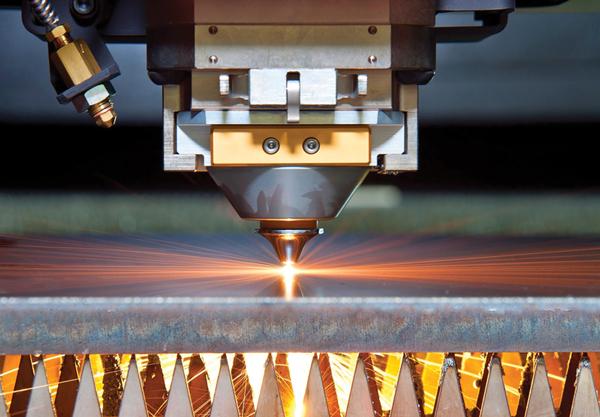
Fiber laser cutting technology is a type of laser technology that uses a fiber-optic cable to deliver a high-powered laser beam to the workpiece. The laser beam is generated in a resonator and then transmitted through the fiber-optic cable to the cutting head. The cutting head focuses the laser beam onto the workpiece, causing it to melt and vaporize. The cutting head moves along the workpiece, following a pre-programmed path, cutting the material precisely. To learn more about fiber laser cutting machines and how they might be useful in different industries, click here.
Advantages of Fiber Laser Cutting Technology
Fiber laser cutting technology has several advantages that have made it a popular choice in the manufacturing industry. Let’s take a look at some of the benefits of fiber laser cutting technology:
1. High Precision: Fiber laser cutting technology offers high precision, which results in accurate and consistent cuts. This is particularly useful for intricate designs and small pieces.
2. Speed: Fiber laser cutting technology is much faster than traditional cutting methods, which means that manufacturers can produce more parts in less time.
3. Versatility: Fiber laser cutting technology can cut through a wide range of materials, including metals, plastics, and composites. This makes it a versatile choice for many different applications.
4. Cost-effective: Despite being a relatively new technology, fiber laser cutting is becoming increasingly affordable. This means that more manufacturers can benefit from its advantages without breaking the bank.
5. Minimal Maintenance: Fiber laser cutting machines require minimal maintenance compared to other cutting methods. This reduces downtime and increases productivity.
Overall, fiber laser cutting technology is a reliable and cost-effective method for precision cutting in the manufacturing industry.
Applications of Fiber Laser Cutting Technology
Fiber laser cutting technology is widely used in various industries, including automotive, aerospace, medical, and electronics. Let’s take a closer look at how fiber laser cutting technology is used in these industries:
In the automotive industry, fiber laser cutting technology is used to cut and shape various car components, such as body panels, exhaust systems, and chassis. This technology allows for precise cuts and reduces the need for additional finishing work.
In the aerospace industry, fiber laser cutting is used to manufacture complex parts for aircraft engines, fuselage, and wings. The technology’s accuracy and speed make it an ideal choice for producing high-quality parts that meet strict safety standards.
In the medical industry, fiber laser cutting technology is used to create intricate surgical instruments, implants, and medical devices. The precision of the laser-cutting process ensures that the parts are accurately sized and shaped, leading to better patient outcomes.
In the electronics industry, fiber laser cutting is used to make circuit boards, microchips, and other small electronic parts. The technology’s ability to cut thin materials and complex shapes makes it an ideal choice for producing high-quality electronic components.
Overall, fiber laser cutting technology has revolutionized the manufacturing industry by enabling faster production times, greater precision, and improved efficiency.
Future of Fiber Laser Cutting Technology
The future of fiber laser cutting technology looks promising. The demand for fiber laser cutting technology is expected to increase in the coming years due to its numerous benefits. Technological advancements in fiber laser cutting technology are also expected in the future, making it more efficient and effective.
Fiber laser cutting technology has already revolutionized the metal cutting industry with its high precision, speed, and versatility. It is a non-contact process that uses a laser beam to cut through various materials such as steel, aluminum, and copper with minimal waste and heat input. This technology has already replaced traditional cutting methods such as plasma and waterjet cutting in many applications.
One of the significant advantages of fiber laser cutting technology is its energy efficiency. Fiber lasers use less power than CO2 lasers, reducing operating costs and environmental impact. They are also more reliable and require less maintenance, making them a cost-effective solution for many businesses.
In the future, fiber laser cutting technology is expected to become even more advanced. Some of the latest developments in this field include beam shaping and adaptive optics, which can improve the quality and precision of cuts even further. There is also a growing trend towards automation and integration with other manufacturing processes, making fiber laser cutting technology even more versatile and efficient.
All in all, the future of fiber laser cutting technology looks bright, and it promises to transform the manufacturing industry in the years to come.
Conclusion
Fiber laser cutting technology has revolutionized the manufacturing industry. Its precision cutting, high speed, low maintenance, and cost-effectiveness have made it a popular choice in various industries, including automotive, aerospace, medical, and electronics. The future of fiber laser cutting technology looks promising, with advancements in artificial intelligence and robotics expected in the coming years. The use of fiber laser cutting technology has increased productivity, reduced waste, and improved the quality of the product, making it an essential tool in the manufacturing process.