How Do Organic Farming Practices Relate to Soil Health?
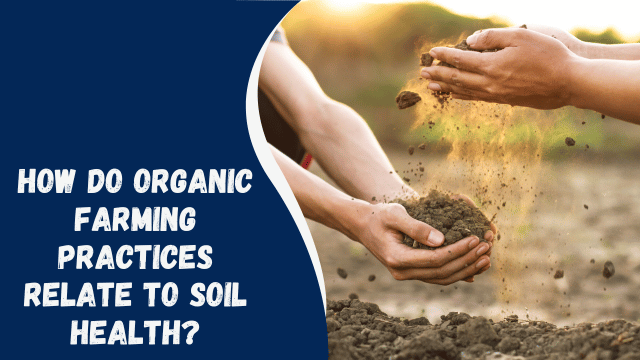
Learn how organic farming practices are intimately connected to soil health. Explore the impact of organic farming on soil, the benefits it offers, and expert insights.
Organic farming practices have gained immense popularity in recent years for their positive impact on both the environment and human health. One of the key aspects of organic farming is its relationship with soil health. In this comprehensive guide, we will delve deep into the intricate connection between organic farming practices and soil health.
Contents
- 1 Introduction
- 2 Organic Farming and Soil Health: A Symbiotic Relationship
- 3 The Foundations of Organic Farming
- 4 Soil Enrichment through Composting
- 5 Natural Pest Control
- 6 Crop Rotation and Biodiversity
- 7 Reduced Soil Erosion
- 8 Benefits of Organic Farming for Soil Health
- 9 Enhanced Nutrient Content
- 10 Improved Soil Structure
- 11 Preservation of Soil Microbes
- 12 Resistance to Soil Degradation
- 13 Expert Insights on Organic Farming and Soil Health
- 14 FAQs
- 15 Q: Does organic farming always result in better soil health?
- 16 Q: How does organic farming benefit the overall environment?
- 17 Q: Can conventional farms transition to organic practices?
- 18 Q: Are organic crops more nutritious?
- 19 Q: Is organic farming more labor-intensive?
- 20 Conclusion
Introduction
Organic farming, often seen as a sustainable and eco-friendly approach to agriculture, encompasses a variety of practices that promote soil health and fertility. It stands in stark contrast to conventional farming methods that heavily rely on synthetic chemicals and pesticides. In this article, we will explore how organic farming practices benefit soil health, enriching it in numerous ways.
Organic Farming and Soil Health: A Symbiotic Relationship
The Foundations of Organic Farming
Organic farming is built on principles that prioritize the well-being of the soil. These principles include minimal soil disturbance, reduced chemical use, and the promotion of natural soil processes. By adhering to these foundations, organic farmers create an environment where soil health can flourish.
Soil Enrichment through Composting
Composting is a fundamental practice in organic farming. It involves the decomposition of organic materials, such as kitchen scraps and plant residues, to create nutrient-rich compost. This compost is then added to the soil, enhancing its structure and fertility. Organic matter in the soil acts like a sponge, retaining moisture and nutrients, which is vital for healthy plant growth.
Natural Pest Control
Organic farming encourages the presence of beneficial insects and microorganisms that help control pests naturally. This reduces the need for chemical pesticides that can harm soil health. When the soil ecosystem is in balance, it can better withstand pest pressures and maintain its vitality.
Crop Rotation and Biodiversity
Crop rotation and maintaining biodiversity are key strategies in organic farming. These practices prevent soil depletion by varying the types of plants grown in a specific area over time. Different plants have different nutrient needs, so rotating crops and fostering biodiversity can enhance soil health by ensuring a more balanced nutrient profile.
Reduced Soil Erosion
Conventional farming methods often lead to soil erosion due to plowing and excessive tilling. Organic farming practices, which emphasize minimal soil disturbance, help reduce erosion and maintain the integrity of the topsoil. This is essential for preserving soil health and preventing degradation.
Benefits of Organic Farming for Soil Health
Enhanced Nutrient Content
Organic farming methods focus on nourishing the soil with organic matter, resulting in higher nutrient content. This benefits not only the plants but also the overall ecosystem that depends on the soil as its foundation.
Improved Soil Structure
The continuous addition of organic matter and reduced use of synthetic chemicals in organic farming improves soil structure. Healthy soil is less compacted and better aerated, allowing plant roots to penetrate deeper and access nutrients more effectively.
How Often Should You Talk When You First Start Dating
Preservation of Soil Microbes
Soil is teeming with microorganisms that play a crucial role in nutrient cycling and soil health. Organic farming practices, by avoiding harmful chemical treatments, preserve these essential microbes, ensuring a thriving soil ecosystem.
Resistance to Soil Degradation
Organic farming’s emphasis on sustainability and soil health contributes to the soil’s resilience. Healthy soil is better equipped to resist degradation processes such as salinization, acidification, and nutrient depletion.
Expert Insights on Organic Farming and Soil Health
To provide further insights into the relationship between organic farming practices and soil health, we reached out to Dr. Emily Carter, a renowned soil scientist with over two decades of experience in the field.
Dr. Carter emphasizes, “Organic farming is a holistic approach that acknowledges the soil as a living entity. By nurturing the soil’s natural processes and avoiding harmful chemicals, organic farmers foster a dynamic and healthy soil ecosystem. This, in turn, leads to sustainable agriculture and better food quality.”
FAQs
Q: Does organic farming always result in better soil health?
A: While organic farming generally promotes soil health, individual outcomes may vary depending on factors like farming practices and environmental conditions.
Q: How does organic farming benefit the overall environment?
A: Organic farming reduces water pollution, conserves energy, and supports biodiversity, making it a more environmentally friendly choice.
Q: Can conventional farms transition to organic practices?
A: Yes, many conventional farms have successfully transitioned to organic practices. It requires a commitment to change and adherence to organic farming principles.
Q: Are organic crops more nutritious?
A: Studies suggest that organic crops may have slightly higher nutrient content, but the primary benefit lies in reducing exposure to synthetic pesticides and chemicals.
Q: Is organic farming more labor-intensive?
A: Organic farming may require more labor initially, but it often leads to reduced input costs and long-term benefits for soil health.
Conclusion
Organic farming practices and soil health are intrinsically linked. Through techniques like composting, natural pest control, and crop rotation, organic farming enriches the soil, resulting in enhanced nutrient content, improved structure, and increased resistance to degradation. As we strive for sustainable agriculture and a healthier environment, organic farming stands out as a promising approach that benefits both farmers and the planet.
Incorporating organic farming principles into our agricultural systems not only ensures bountiful harvests but also safeguards the Earth’s most precious resource: our soil.