
Exploring the Top Trend Indicators for 2023
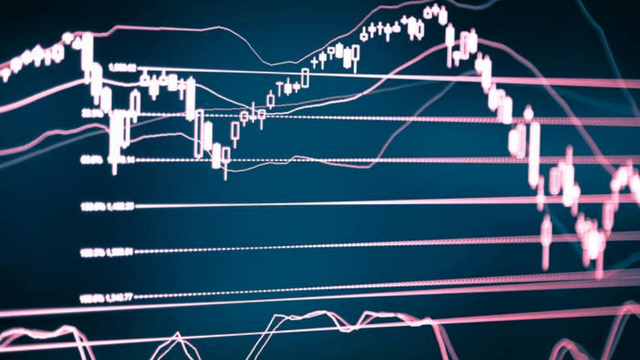
Navigating the complexities of financial markets demands expertise and analytical power to craft precise and dependable market predictions. This involves using two fundamental techniques: fundamental and technical analysis. In particular, technical analysis relies on charts, signals, and indicators to empower trend traders with insights into present and future trends and price movements.
The wide array of technical indicators available on trading platforms might seem overwhelming at first glance. However, it’s possible to simplify this by clarifying the indicators essential for trend trading.
Contents
Unpacking Trend Trading
Trend trading, a strategic approach, revolves around capitalising on market trends by identifying and investing in profitable trends. Across various markets, products and assets, prices permanently fluctuate. Some prices maintain a consistent direction for a certain period, presenting opportunities for trend traders to make informed market decisions. For instance, if a stock’s price demonstrates an upward trajectory, and technical analysis suggests this trend will persist, it signifies an attractive buying opportunity for traders.
Yet, identifying and controlling a trend is not as straightforward as it may seem. Price movements can be tricky, with an upward trend potentially converting into a steep decline or sustained fluctuations.
This is where adept trend traders deploy trend indicators to conduct a comprehensive analysis of price movements and demonstrate the expected duration of a trend.
Using Trend Indicators
As the term suggests, trend indicators are technical tools and signals that provide in-depth insights into market trends. They empower traders to sense the broader context beyond the current price trend, enabling them to formulate market forecasts.
Experienced traders go beyond just price action and consider the comprehensive picture, encompassing historical price movements, investment cycle phases, industry dynamics and more. Signals and indicators arising from external and internal factors influencing prices help determine potential price directions and the expected duration of market movements.
Trend indicators and signals thus equip traders to make informed decisions to mitigate risk. Furthermore, the accuracy of indicators varies across industries, contingent upon market complexity and influencing factors. While technical indicators may exceed the stock market, their analysis might prove inaccurate in the highly volatile and dynamic crypto market.
Top Trend Indicators for Your Arsenal
Among the multitude of trend trading indicators available, we’ve selected the top three indicators for your trading toolkit:
- The moving Average Convergence Divergence Indicator (MACD) is a widely adopted tool for comprehending price movements by comparing short-term historical changes with longer-term historical price trends. One of its components is the Exponential Moving Average (EMA), which employs varying timeframes (e.g., 10-day and 50-day) to estimate market prices. If the short-term historical line crosses above the long-term historical line, it may suggest a potential upward trend.
- The Relative Strength Index indicator (RSI) assesses gains and losses within 14 periods by dividing the cumulative gains by the cumulative losses. This calculation yields a ratio ranging from 0 to 100. An RSI ratio exceeding 70 implies overbought conditions, signalling a potential trend reversal. Conversely, an RSI result below 30 indicates oversold conditions.
- The Bollinger Band Indicator (BB) employs standard deviation to pinpoint price outliers and outline potential price movements beyond these outlier points. This indicator traces three lines around the price trend, representing the maximum limit, current price and minimum limit. When the price crosses above the upper limit of the BB, it signals overbuying. Conversely, when the price dips below the lower limit, it indicates overseling.
Conclusion
Trend trading can prove challenging due to the nuanced nature of market trends. Trend indicators play a pivotal role in understanding current market trends by checking historical price data and changes. These indicators empower traders to analyse present and historical price fluctuations, forecast potential trends and identify promising investment opportunities.

