Experience Lasting Migraine Relief with Botox
Contents
Introduction:
This post is all about what people go through when they have chronic migraines and how Botox can help them get relief from it. Botox is known for helping people enhance their looks but it works amazing for migraine patients. So, today we will find out how useful this treatment is & what you can expect from it.
According to a recent survey, so many people with chronic migraines never find a way to get lasting relief and feel frustrated all the time. While an abnormal function can be treated by the prescribed medications or life changes, for others, the pain is never going away. Botox-a procedure whose common use is reducing facial lines and folds- has turned out to be an innovative treatment for chronic migraines. But how does it, and is botox for migraines for you?
With that said, it’s high time we explore scientific evidence on Botox for migraine, the three essential benefits that the treatment offers, what really happens during the Botox process, and why it could be the solution to your migraine woes.
Read More: The Connection Between Neck Injuries and Occipital Nerve Pain: Can Surgery Help?
1. What are Chronic Migraines & the Need for Long-Lasting Relief
Chronic migraines are categorized as having at least 15 headache days per month, including at least 8 migraines. The experts handling such cases present them as rebound headaches with throbbing pain, nausea, light sensitivity, vomiting that affects work, social activities, and overall health. The conventional treatment may encompass prescription medicines, changes in diet and behavior patterns, and the avoidance of certain stimuli; however, efficacy is unpredictable, and side effects of the medicines themselves can also be particularly hard to contain.
2. How Botox Works for Migraine Relief
Botox, or botulinum toxin, is a neurotoxin that, when injected in very small doses, blocks nerve signals to muscles. As for the migraines, its effectiveness, Botox is believed to act for:
Blocking Pain Signals: Botox may interfere with signals that make muscles contract and reduce the movement of chemicals involved with pain sensation to the brain.
Relaxing Muscle Tension: Injections assist to relax the muscles of head, neck, and shoulders that are considered to cause migraine mostly.
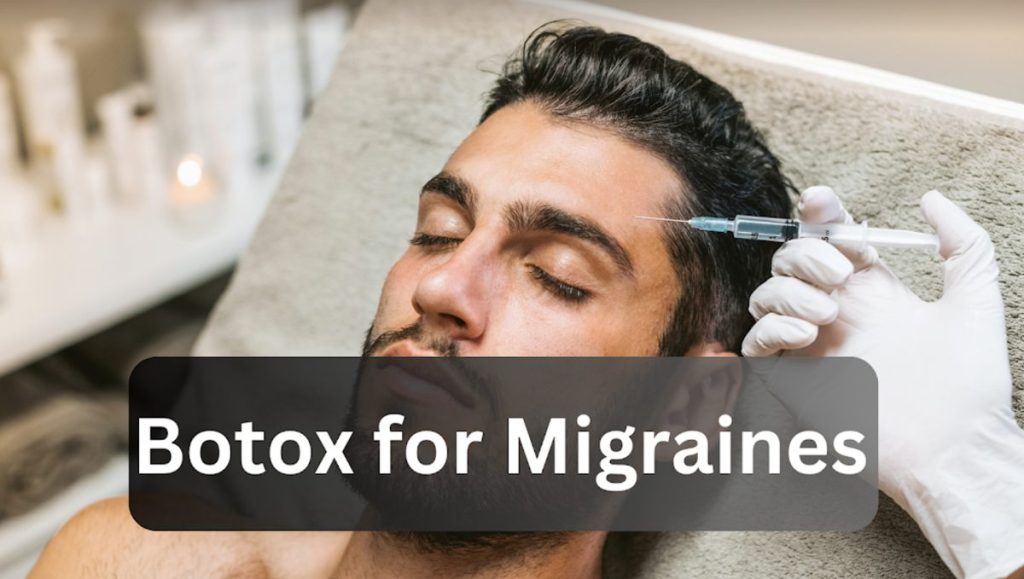
In migraine therapy, the Botox injections work by blocking certain locations in the forehead, temples, back of the head, and neck through which the neurotoxin prevents migraine formation before they occur.
3. What to Expect During a Botox Treatment for Migraines
If you’re considering Botox for migraine relief, check out these points.
Consultation: It is your healthcare provider’s responsibility to determine whether you should have Botox or not. It is often prescribed for those people who have chronic migraines not the episodic migraines most of the time.
Injection Process: The procedure takes roughly 30-40 very small injections made in seven regions of the head and neck – the forehead, temples, and base at the back of the skull. The injections generally require anything between 15-20 minutes in the course of the treatment.
Minimal Discomfort: Even if several studies confirm later that most patients do not experience significant pain, they usually say that it felt like a pin prick or a mild sting. As for the technique, needles are extremely fine, so pain is rare, and if it occurs, there is no need for Recovery Time.
Gradual Relief: In most cases, Botox’s effects develop gradually between 2-4 weeks; The effects of Botox normally last 12 weeks. Most of the patients find themselves having constant improvements of migraines with treatments taken every 12 weeks.
4. Benefits of Botox for Chronic Migraine Relief
For those who have struggled with managing chronic migraines, Botox offers numerous benefits:
Long-Lasting Relief: The effectiveness of Botox is quite long lasting particularly when one is able to undergo a session, between three months.
Reduced Dependence on Medications: A lot of people report that they are able to cut down on the overall quantity of migraine tablets they have to take every day which often have adverse effects.
Improved Quality of Life: It enables people who have headaches most of the month to be symptom-free though with a few headache-free days improves work productivity, social function, and psychological well-being.
Preventative Effects: Of course, Botox is not a symptomatic treatment like many other migraine medications, but it is prophylactic, and that means it prevents migraines in chronic migraine sufferers.
Read More: What to Ask Your Surgeon Before Occipital Neuralgia Surgery
5. Are There Any Side Effects?
Like all forms of therapies for diseases, Botox for migraines has side effects though they are negligible. Common side effects may include:
Neck Pain and Stiffness: This is one of the other more frequently described side effects but is rarely severe or enduring.
Mild Injection-Site Reactions: There may be mild inflammation, purplish discoloration, or increased bulk at the point of injection, which pass off in the course of forty-eight hours.
Drooping Eyelids: As it was reported, in some special cases, the Botox can lead to a temporary ptosis of the eyelids or eyebrows, which is not dangerous and normally fades in two or three weeks.
Speaking to an experienced health care provider can also aid in avoiding some of these side effects as well as putting the injections at the right place that will bring about the desired pain relief.
Final Thoughts
Botox has proven to be very effective in managing chronic migraines, and has provided relief to those who have had no better option for many if not all years. Through prophylactic use, Botox can change lives of people with chronic migraines, giving them the ability to take back control and have a life without migraines.
If migraines have you in its grip, then consult a healthcare provider about whether injections of Botox can be used to help you. From each & every session you may be able to get free from the migraines and gain mastery on what is valuable.