Concrete Floor Leveling 101: A Comprehensive Guide
Concrete floor leveling is essential in residential and commercial construction, ensuring a smooth, even surface for flooring installation. Whether you’re renovating a basement, preparing a garage floor, or constructing a new building, understanding the fundamentals of concrete floor leveling can save time, reduce costs, and improve the outcome of your project. This guide will walk you through everything you need to know about concrete floor leveling, including the importance of a level floor, the materials and tools required, and step-by-step instructions for DIY enthusiasts and professionals alike.
Contents
Why is Concrete Floor Leveling Important?
A level floor is essential for several reasons:
- Structural Integrity: Uneven floors can lead to structural issues over time. Cracks, gaps, and other imperfections can compromise the concrete’s strength and the building’s overall stability.
- Aesthetic Appeal: A smooth, level floor provides a better foundation for installing various flooring materials, such as tile, hardwood, laminate, or carpet. It ensures that the finished floor looks even and professional.
- Safety: Uneven floors can be a tripping hazard, posing risks to inhabitants and visitors. Level floors help create a safer environment.
- Durability: Flooring materials are more likely to wear out quickly if installed on an uneven surface. Leveling the floor increases the lifespan of the flooring materials.

Materials and Tools Needed for Concrete Floor Leveling
Before starting the leveling process, gather the necessary materials and tools:
Materials
- Self-Leveling Compound: This concrete-based mixture spreads evenly across the floor, filling in low spots and creating a level finish.
- Primer: You’ll apply a bonding agent to the concrete surface before the self-leveling compound to ensure proper adhesion.
- Water: Used to mix the self-leveling compound according to the manufacturer’s instructions.
- Repair Mortar: This is for patching significant cracks and holes before applying the leveling compound.
Tools
- Bucket: For mixing the self-leveling compound.
- Drill and Mixing Paddle: To ensure a consistent mixture of the leveling compound.
- Trowel: For spreading and smoothing the compound.
- Squeegee: To help distribute the compound evenly.
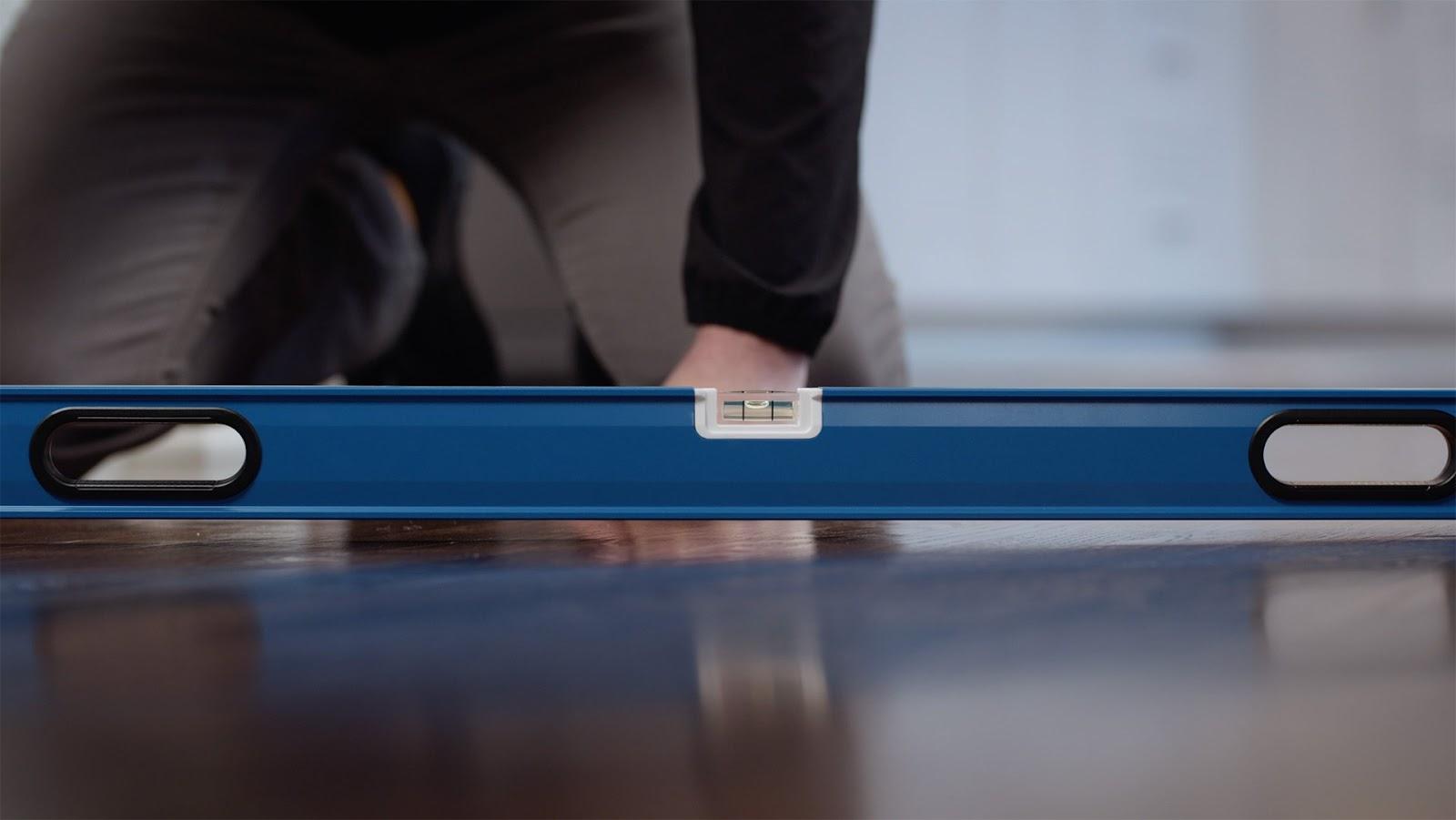
- Leveling Bar or Straightedge: Used to check the evenness of the floor.
- Sandpaper or Grinder: To prepare the surface by smoothing rough areas.
- Protective Gear: Wear gloves, safety glasses, and a dust mask to ensure safety.
Step-by-Step Guide to Concrete Floor Leveling
Step 1: Prepare the Surface
- Remove all furniture, appliances, and baseboards from the room: Removing all furniture, appliances, and baseboards from the room before starting a concrete leveling project ensures an unobstructed workspace and prevents damage to these items.
- Clean the Floor: Remove all debris, dust, and dirt from the floor. Sweep and vacuum thoroughly to ensure a clean surface.
- Repair Cracks and Holes: Use repair mortar to fill in any significant cracks or holes. Importantly, allow the mortar to dry completely before proceeding.
- Sand the Surface: Use sandpaper or a grinder to smooth rough areas and remove loose particles.
- Apply Primer: Follow the manufacturer’s instructions to apply a coat of primer to the floor to ensure better adhesion of the self-leveling compound. Allow the primer to dry completely.
Step 2: Mix the Self-Leveling Compound
- Read the Instructions: Carefully read the manufacturer’s instructions for the self-leveling compound to ensure proper mixing ratios.
- Mix the Compound: Mix the self-leveling compound with water using a drill and mixing paddle in a large bucket. Mix until the compound has a smooth, lump-free consistency.
Step 3: Pour and Spread the Compound
- Pour the Compound: At one corner of the room, pour the self-leveling compound onto the floor. Work in small sections to ensure even coverage.
- Spread the Compound: Use a trowel or squeegee to spread the compound evenly across the floor. Work quickly, as the compound begins to set within minutes.
- Check for Levelness: Use a leveling bar or straightedge to check the evenness of the floor. Make adjustments as needed to ensure a level surface.
Step 4: Allow the Compound to Cure
- Drying Time: Allow the self-leveling compound to dry according to the manufacturer’s instructions, typically taking 24 to 48 hours.
- Final Check: After the compound has dried, check the floor for any remaining uneven areas. Sand down any high spots and fill in any low spots as needed.
Tips for Successful Concrete Floor Leveling
- Work in a Controlled Environment: Avoid working in extreme temperatures or high humidity, as these conditions can affect the curing process of the self-leveling compound.
- Use High-Quality Materials: Invest in high-quality self-leveling compound and primer to ensure the best results.
- Follow Manufacturer’s Instructions: Always adhere to the manufacturer’s instructions for mixing, application, and drying times.
- Plan Ahead: Have all your materials and tools ready before starting the leveling process to avoid delays.
- Practice Safety: Wear protective gear, including gloves, safety glasses, and a dust mask, to protect yourself from dust and chemicals.
Professional vs. DIY Concrete Floor Leveling
While DIY concrete floor leveling can be a cost-effective option for small projects, there are instances where hiring a professional is recommended:
- Large Areas: At Epp Foundation Repair, professional expertise ensures efficient and effective leveling for large spaces like commercial buildings or extensive residential areas.
- Severe Unevenness: If the floor has significant uneven areas, deep cracks, or structural issues, a professional can provide the necessary repairs and leveling.
- Time Constraints: Professionals have the experience and equipment to complete the job quickly and accurately, saving you time.
- Quality Assurance: Hiring a professional ensures a high-quality finish, reducing the risk of future issues with the flooring.

Don’t Hesitate to Call Us
Concrete floor leveling is critical in ensuring a smooth, even surface for any flooring project. By following this comprehensive guide, you can be confident that you’ll have a level floor that is aesthetically pleasing and structurally sound, providing a solid foundation for your flooring installation.
If you decide the DIY concrete leveling isn’t for you, the professionals at Epp Foundation Repair (Serving Nebraska and parts of Iowa, Kansas, and Missouri) are prepared and have the technical know-how to ensure that your project stays on an even keel. Remember, a level floor not only enhances the appearance of your space but also contributes to the safety and longevity of your flooring materials.