
BIM Strategies for Construction Projects
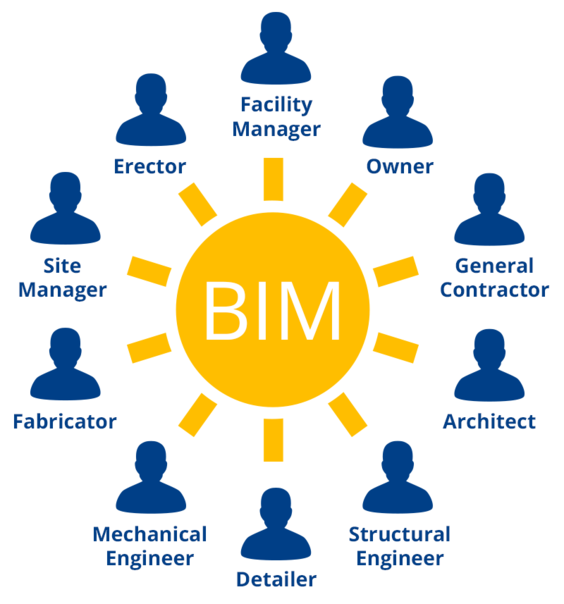
BIM (building information modeling) allows construction teams to collaborate and communicate more efficiently, leading to cost savings, increased productivity and a reduction in human errors. This said, since it’s still being developed, not all construction professionals understand its potential benefits.
This article highlights strategies to help construction managers and teams build greater trust in BIM-based projects. We’ll cover how BIM can help as a strategy for project design, planning, budgeting, management, collaboration and clash detection.
Collaborative design
BIM promotes collaboration by unifying all the teams involved in construction projects into one central platform.
Architects, engineers, construction managers, operations and maintenance personnel, and project management professionals can all access the same platform and see updates. This ensures everyone works towards the same while helping prevent costly errors from occurring.
Results have shown that using BIM, a three-dimensional model-based approach can be an invaluable way of streamlining design and construction processes, improving communication among stakeholders, and aiding clash detection and resolution.
Furthermore, using BIM can save both time and money by eliminating costly rework and redesigns. BIM helps validate designs for constructability while providing accurate timelines and cost estimations. Lastly, it reduces construction risks while simultaneously improving overall project quality.
3D Modeling
BIM allows multiple professionals to work collaboratively on one 3D model simultaneously, which reduces design errors and ensures everyone stays on the same page.
When an architect is designing a building, the more precise and detailed a model is, the better it will be able to identify possible issues that may occur later in the process. It also assists them in making more informed decisions regarding building design and performance.
During construction, 3D modeling can help verify that projects are on schedule and meeting their goals, as well as compare current work to projections to help avoid rework and increase efficiency. A 3D model can assist with project coordination by highlighting potential clashes early. This eventually will reduce on-site rework costs and save money in the long run.
Quantity Take-Offs
Construction project managers must conduct quantity take-offs – or material lists – of all the raw materials required for a building or structure. To many this may seem tedious but it is essential to stay on budget and run a successful construction project.
Top Article: Managing Construction Projects
An accurate cost estimation helps avoid cost overruns that can lead to delays and higher labor expenses. Project managers must make sure they’re estimations are accurate early to save their companies and clients time and money in labor costs and budget overages.
Conducting a manual takeoff requires keen observational skills and patience as well as years of practical experience. Accuracy must be maintained so as to generate precise project cost proposals.
Traditional quantity take-offs involve conducting them using 2D drawings, which can be time consuming and may often result in an overestimation or an underestimation of the quantities required for specific tasks.
In stark contrast, the use of BIM streamlines this process. Project managers can procure the raw materials they need all at the same time, instead of having to revisit a blueprint for edits. Project managers can identify what they need, and get it faster with accurate 3D models of their blueprints.
BIM can assist with scheduling
BIM allows teams to develop more accurate project schedules by taking into account the sequencing of various tasks, as well as identifying potential bottlenecks and distributing resources more effectively.
Human error during manual cost and time estimates for projects are reduced dramatically, leading to substantial savings in both money and time for the entire project. With the use of 3D modeling on one platform, each team can see any important changes to the design, and map what they have to do on the design.
Different contractor teams have better visibility of the plans so they can plan out their installations accordingly.
Conclusion
Effective implementation of BIM requires setting clear goals and objectives for its deployment on construction projects, with each objective meeting certain criteria such as being specific, measurable, attainable, relevant and time-bound (SMART).
Managing BIM during design and construction involves devising a plan to utilize it effectively in capital facility projects. The integration of this system will help to plan its adoption throughout the lifecycle of any given project.


