Animation’s Unlikely Hero: The Impact and Legacy of Courage the Cowardly Dog
Contents
Introduction
Few animated series have left an indelible mark on the world of animation like “Courage the Cowardly Dog.” Premiering in 1999, this show, created by John R. Dilworth, defied conventions and expectations, introducing audiences to a timid yet incredibly endearing character. In a landscape dominated by fearless and brash protagonists, Courage emerged as an unlikely hero who captured hearts and minds in ways no one could have anticipated. The show’s unique blend of horror, humor, and heart has solidified its position as a cult classic, sparking discussions about the very nature of courage and heroism in animation.
Breaking Stereotypes: Courage’s Character Design and Development
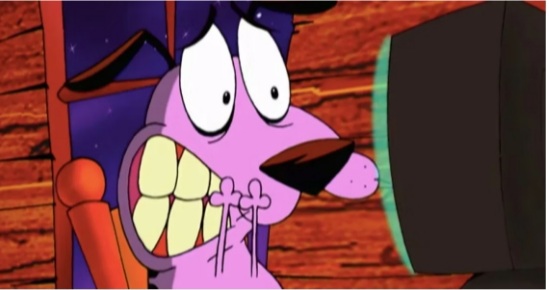
Courage, a small pink dog with big, anxious eyes, instantly stood out from the animated crowd. His seemingly cowardly nature, marked by constant shivers and apprehension, challenged the established norms of heroic characters. Yet, beneath his fear, Courage possesses an unwavering determination to protect his owners, Muriel and Eustace, from the bizarre and supernatural threats that constantly encroach upon their isolated farmhouse. This paradoxical nature endeared Courage to audiences who found his relatability refreshing and authentic.
Throughout the series, Courage’s character developed remarkably, illustrating that true heroism doesn’t always fit a traditional mold. His growth from trembling pet to a symbol of resilience showcases the importance of inner strength, even in the face of paralyzing fear. Courage’s journey resonates with viewers of all ages, underscoring the idea that confronting and managing fear is a heroic feat in itself. His character arc reminds us that courage isn’t the absence of fear, but the ability to take action despite it, a message that continues to inspire and reassure countless individuals facing their own anxieties.
Mastering Fear: Themes Explored in the Show
At its core, “Courage the Cowardly Dog” delved into the intricate relationship between fear and courage. The show’s creators masterfully wove together episodes that addressed fear in various forms, from supernatural horrors to everyday anxieties. By confronting these fears head-on, the series allowed viewers to empathize with Courage’s struggles and discover that courage isn’t the absence of fear, but rather the ability to overcome it.
The show’s exploration of real-life fears, such as abandonment and the unknown, resonated with audiences of all ages. In doing so, “Courage” became a platform for discussions surrounding mental health and personal growth, proving that animation could provide both entertainment and meaningful introspection. The show’s legacy includes not only its memorable characters and scary episodes but also its contribution to open conversations about fear and courage. In a society that often emphasizes concealing vulnerabilities, “Courage the Cowardly Dog” taught us that acknowledging and facing our fears is a vital step toward personal development and, indeed, heroism.
Unconventional Storytelling: The Format and Structure of the Episodes
“Courage the Cowardly Dog” was anything but formulaic in its storytelling approach. Each episode ventured into uncharted territory, embracing various genres, tones, and artistic styles. This unpredictability not only kept audiences engaged but also highlighted the show’s commitment to pushing creative boundaries. The episodic structure, while seemingly disjointed at times, served as a canvas for experimentation, allowing the creators to delve into horror, comedy, and drama with equal gusto.
In a medium often criticized for formulaic storytelling, “Courage” demonstrated that animation could be a playground for inventive narrative techniques, inspiring future creators to embrace risks and diversify their storytelling methods. The show’s willingness to take narrative leaps not only showcased the creative team’s versatility but also encouraged other animators to break free from conventional molds. “Courage” stands as a beacon of storytelling innovation, a reminder that the way a story is told can be just as impactful as the story itself, inspiring creators to continue pushing the boundaries of animation.
Influence on Subsequent Animation: Legacy and Inspiration
The legacy of “Courage the Cowardly Dog” can be felt across the animation landscape. Its willingness to tackle unconventional themes, its emphasis on emotional depth, and its unique blend of horror and humor influenced subsequent shows, serving as a touchstone for creators who sought to break away from the norm. Elements of Courage’s character can be seen in protagonists who embrace vulnerability and relatability over stoic heroics.
Creators such as Rebecca Sugar, the mind behind “Steven Universe,” have cited “Courage” as an inspiration for their own boundary-pushing work. The show’s legacy endures, signaling a shift in the animation industry’s willingness to explore the complexities of human emotions through unconventional characters and narratives. As animation evolves and new stories are told, the courageous legacy of Courage continues to inspire a generation of animators to craft characters and tales that resonate on a deeper, more authentic level.
Pop Culture and Memorable Moments
“Courage the Cowardly Dog” has etched itself into the annals of pop culture with its memorable scenes and characters. Who could forget the haunting visage of King Ramses or the charismatic villain Katz? The show’s catchphrases, such as “The things I do for love” and “Return the slab,” have become iconic memes, transcending the show itself. Courage’s enduring presence on the internet speaks to the show’s ability to connect with audiences across generations.
Its ability to balance eerie tension with heartfelt moments and lighthearted humor has ensured that it remains a fixture in the cultural consciousness. The show’s distinct visual style and memorable characters have left an indelible mark, making it a common reference point in discussions about animated television. Its impact continues to be felt in fan art, tributes, and the enduring conversations it sparks among both fans and creators alike.
Conclusion
In the tapestry of animation history, “Courage the Cowardly Dog” stands out as an unlikely yet powerful hero. Through its unconventional storytelling, exploration of fear and courage, and enduring impact on subsequent animation, the show has left an indelible mark on both the industry and its audience. Courage’s legacy is a testament to the fact that true heroism isn’t always loud and bold; sometimes, it’s found in the quiet moments of facing one’s fears.
As animation continues to evolve, “Courage” serves as a reminder that the most unexpected characters can teach us the most profound lessons about bravery, resilience, and the human experience. It challenges us to redefine heroism and recognize that strength can be found in vulnerability. Ultimately, “Courage the Cowardly Dog” reminds us that the true measure of a hero is not the absence of fear, but the unwavering determination to stand up in the face of it.